Sam Poo Kong Temple
A Historical Investigation into Java's Most Contested Chinese Heritage Site
Sam Poo Kong Temple in Semarang remains one of the most contested historical sites on the island of Java to this day. Most tourists only see the red buildings and incense smoke, never realizing that almost every basic fact about this place is disputed.
I first visited in 2019, conducting fieldwork on Chinese temple architecture in Southeast Asia. I spent two weeks in Semarang then. I returned in 2023 to verify some documentary records. Four years between visits, my views have changed.
The Dating Problem
Regarding the time of Zheng He's arrival in Semarang, existing documents give a range of 1400 to 1416. A full sixteen-year span. This number itself tells the story.
Chinese official historical records contain no direct mention of Semarang. Ma Huan's "Yingya Shenglan" (Overall Survey of the Ocean's Shores), written in 1416, detailed various ports visited by Zheng He's fleet. Semarang is not among them. The "Malay Annals" mentions the fleet stopping here for one month for repairs in 1413, with Zheng He and interpreter Ma Huan regularly going to pray at a local Chinese mosque. The authenticity of this document itself is disputed in academic circles. It was only first discovered in the 1960s.
Local oral tradition gives another version. Zheng He's helmsman Wang Jinghong fell ill, and the fleet anchored at the mouth of the Garang River. Zheng He discovered a rock cave on a nearby hillside, which he used for rest and prayer. This story explains the name "Sam Poo Kong"—a transliteration of "Sanbao Cave" in Hokkien dialect, referring to Zheng He's birth name Ma Sanbao.
Regarding the exact year of the fleet's arrival, even within the temple there is no unified account. "Every year at the Zheng He Festival we celebrate the 30th day of the sixth lunar month as his arrival in Semarang, but which year, no one really knows."
Architectural Remains
The existing buildings have almost no physical connection to the original 15th-century structures. A landslide in 1704 destroyed the original stone cave and temple. Reconstruction occurred in 1724 at a location slightly farther from the original site, closer to the city center. This reconstruction itself underwent major renovations in 1937, 1950, and 2002-2005.
Site Specifications
The Temple Complex
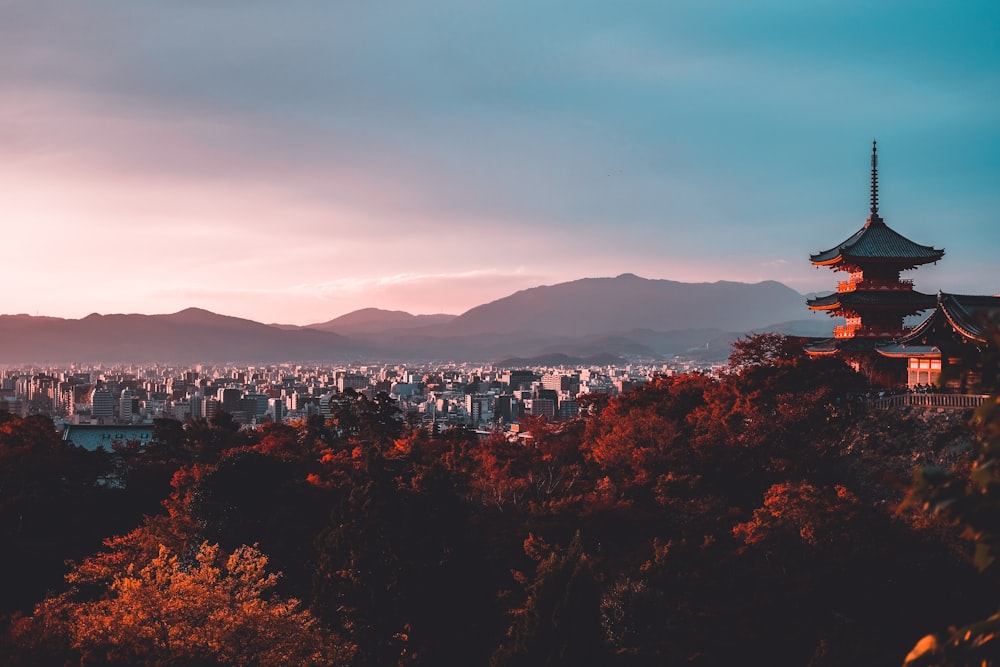
During my 2023 visit, I spent three days measuring and recording architectural details. The three-tiered pagoda roofing is typical East Asian temple form. The red exterior walls conform to Chinese architectural tradition. Javanese elements are mainly reflected in the stone carvings and courtyard layout. Relief walls added during the 2002-2005 renovation tell the story of Zheng He's voyages, with explanations in Chinese, Indonesian, and English. These reliefs are 21st-century products, not historical remains.
The stone cave inside the main hall retains a well, said to never run dry and to possess healing properties. This claim cannot be verified. When I observed in 2019, the water level was approximately 1.5 meters below ground level; when I returned in 2023, it looked about the same. The temple administration has not systematically recorded water levels.
The Complex History of Ownership
In the mid-19th century, the temple was purchased by a Jewish landowner named Johanes. He charged worshippers fees to pray. The Chinese community paid 2,000 Dutch guilders annually to keep the temple open, later reduced to 500 guilders following protests. This fee remained burdensome, and many worshippers abandoned Sam Poo Kong, instead bringing a statue of Zheng He to Tay Kak Sie Temple 5 kilometers away, where they could pray for free.
In 1879, local merchant Huang Zhixian purchased the entire complex and opened it free of charge. The Chinese community held a celebration parade for this occasion. In 1924, temple ownership was transferred to the newly established Sam Poo Kong Foundation. During the Japanese occupation (1942-1945), the Japanese military installed electrical facilities for the temple and also donated a piece of calligraphy of Zheng He. During the independence war (1945-1950), the temple fell into disrepair due to neglected maintenance.
This history of ownership changes is omitted from most tourist introductions. But it explains why Sam Poo Kong and Tay Kak Sie Temple in the city center have a close ritual connection—every year on the 30th day of the sixth lunar month during the Zheng He Festival, worshippers parade statues of Zheng He and others from Tay Kak Sie to Sam Poo Kong. This tradition originated from the 19th-century period when the Chinese community was forced to leave Sam Poo Kong.
Religious Syncretism
Sam Poo Kong is a classic case study for religious syncretism in Southeast Asia. Zheng He himself was Muslim. His family came from Yunnan, and both his grandfather and father had completed the pilgrimage to Mecca. The Kyai Juru Mudi hall within the temple complex contains a bedug, a traditional Islamic drum. The main Sam Poo Kong hall faces northwest, oriented toward Mecca.
Current temple users include Buddhists, Taoists, Muslims, and believers of indigenous Javanese religions. The Tho Tee Kong hall enshrines the Earth God, belonging to Taoist and Confucian tradition. The altar in the main hall has both Buddhist and Taoist elements. Many Javanese people who come to pray follow the local ngalap berkah tradition, praying to Zheng He's statue for health, wealth, and safe travels.
Scholar Siti Maryam Salahuddin in her 2016 paper described the religious phenomena at Sam Poo Kong as "the cultural and religious interconnection of Javanese abangan, Islam, Taoism, and Buddhism." She pointed out that temple members' understanding of "divine unity" was politically influenced by Indonesian national policy.
I personally have reservations about the extent of syncretism. During my 2023 visit, I noticed that worshippers from different religious backgrounds use different halls within the complex. Muslims mainly at Kyai Juru Mudi, Chinese Buddhists concentrated in the main hall, local Javanese mostly at Mbah Kyai Tumpeng. "Syncretism" might more accurately be called "coexistence." But this requires more systematic investigation to draw conclusions.
Source Problems
The main obstacle to researching Sam Poo Kong is the scarcity of primary sources. Chinese official records do not mention Semarang. The earliest local written records are 18th-century reconstruction documents. Narratives about Zheng He's stay here mainly come from oral tradition and the "Malay Annals."

The "Malay Annals of Semarang and Cerbon" only first appeared in the 1960s, and its origin and authenticity remain in question to this day. Leo Suryadinata's 2005 edited volume "Admiral Zheng He & Southeast Asia" includes multiple papers discussing this issue. The conclusion: it cannot be fully confirmed, nor can it be fully denied.
Documents preserved by the temple are mainly financial and property records from the 19th century onward. Earlier history can only be inferred through architectural archaeology and oral history research. During my 2023 visit, I asked whether formal archaeological excavation had been conducted; the answer was no. The original site of the 1704 landslide is now covered by other buildings.
Current State
Visitor Information
Admission
Weekdays: Locals IDR 10,000 (~$0.61), Foreigners IDR 15,000 (~$0.92). Weekend prices slightly higher.
Hours
8:00 AM – 8:00 PM daily. Traditional Chinese costume rental available on weekends, from IDR 80,000.
Major Festivals
Zheng He Festival (6th lunar month, 30th day) with parade from Tay Kak Sie. Lunar New Year celebrations.
The 2002-2005 renovation was overseen by the Sam Poo Kong Foundation, completed in conjunction with the 600th anniversary commemoration of Zheng He's arrival in Java. This renovation expanded the main hall from the original 16m × 16m to 34m × 34m. The exterior appearance basically preserved the mixed Chinese and Javanese style, but materials and craftsmanship are modern.
Two major annual festivals: the Zheng He Festival on the 30th day of the sixth lunar month (parade from Tay Kak Sie to Sam Poo Kong), and celebrations during the Lunar New Year period. During the Zheng He Festival, there are performances of lion dance, Reog, and traditional dance.
Visitor numbers have increased significantly over the past two decades. When I visited in 2019 on a weekday afternoon, there were about thirty to forty people. In 2023, also a weekday afternoon, the number approached one hundred. The temple administration does not publicly release annual visitor statistics.